
With global climate change, energy transformation and consumption upgrading, the importance of the refrigeration industry has become more prominent. On the one hand, frequent high temperature weather has driven the growth of air conditioning demand, the expansion of food cold chain has helped reduce waste, and the medical cold chain has provided protection for the preservation of vaccines and biological preparations; on the other hand, stricter environmental regulations have prompted the industry to transform to green refrigeration technology (such as natural working fluids and high-efficiency compressors), and intelligent and Internet of Things technologies have also promoted equipment energy efficiency improvement and remote management.
In the future, the development of refrigeration equipment will pay more attention to energy conservation, environmental protection, low carbonization and intelligence. Driven by sustainable development and technological innovation, the market prospects are broad, especially in the field of emerging economies and renewable energy.
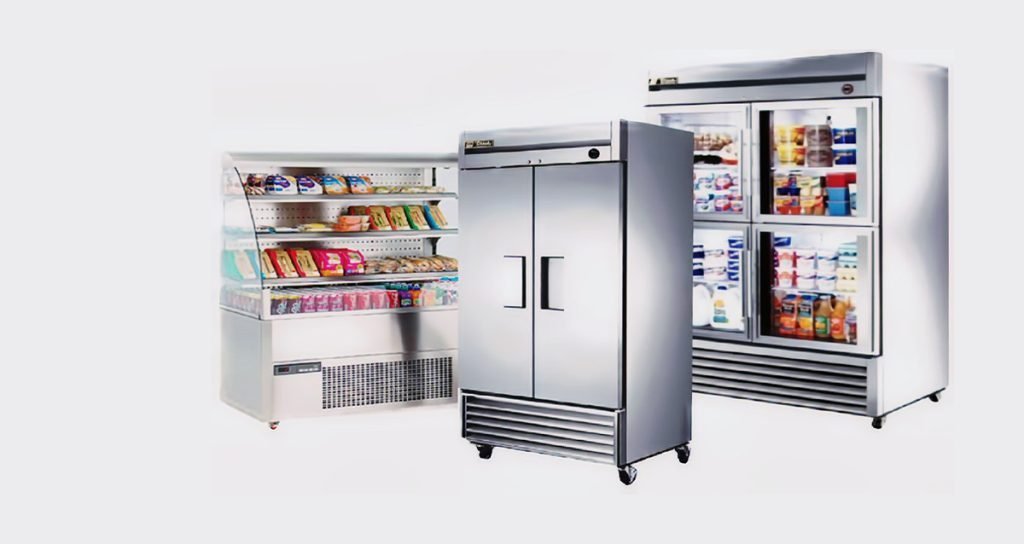
Analysis on the current status and future prospects of China’s refrigeration equipment industry in 2025
Driven by global warming and energy transformation, the refrigeration equipment industry is undergoing a profound transformation from “scale expansion” to “value creation”. As the world’s largest producer and consumer of refrigeration equipment, the speed of technological iteration, industrial chain integration capabilities and consumer demand upgrades in the Chinese market are redefining the global industrial landscape. The “2025-2030 China Refrigeration Equipment Market Status Analysis and Development Prospect Forecast Report ” released by China Research Institute of Industry pointed out that the industry has broken through the boundaries of traditional refrigeration functions and accelerated its evolution in the three major directions of high-efficiency energy saving, intelligent Internet of Things, and green environmental protection. It is expected that by 2030, the market size will exceed 100 billion yuan, becoming the source of global technological innovation and the core engine of market growth.
Market development status: dual symphony of technology iteration and demand upgrade
- Technological breakthroughs reshape product value
The technological innovation of refrigeration equipment is reshaping the user experience in a “silent and subtle” way. The popularization of variable frequency compressor technology has greatly improved the energy efficiency ratio, and traditional fixed frequency compressors have gradually withdrawn from the mainstream market; magnetic levitation centrifuges reduce energy consumption by reducing mechanical friction, becoming the new favorite in the field of data centers and industrial cooling; breakthroughs in liquid cooling technology have greatly reduced the cooling cost of a single cabinet, and technology giants such as Huawei and Alibaba have applied it to data centers on a large scale, forming a market worth hundreds of billions of yuan.
The integration of intelligent control technology gives the equipment the ability to “actively provide services”. Haier Smart Home’s AI temperature-controlled commercial air conditioner dynamically adjusts the temperature through a deep learning algorithm, combined with a fault warning function, to reduce energy consumption in commercial places; the GPT large model voice system equipped with Orvibo integrated air conditioners can predict user needs, reduce power load during peak hours, and significantly improve the overall energy saving rate. These innovations not only solve the pain points of “high energy consumption and low experience” of traditional equipment, but also upgrade refrigeration equipment from a single temperature control tool to an energy management node.
- Demand stratification gives rise to a diversified market
Consumption upgrades and scenario segmentation are driving the market to present a “K-shaped differentiation”: the high-end market focuses on the integration of technological empowerment and art. A luxury brand launched a gold-inlaid smart shower head (with integrated refrigeration module). With its starry sky ceiling spray and fragrance system, the price exceeds 100,000 yuan and is still sought after by high-net-worth individuals. The mass market emphasizes cost-effectiveness and basic functions. Products worth thousands of yuan achieve core functions such as constant temperature and water saving through modular design, and their penetration rate in the sinking market is rapidly increasing.
Scenario-based demand has become a new growth pole. In the home scenario, new equipment such as ice bars and beverage cabinets have emerged to meet personalized fresh-keeping needs; in the commercial scenario, supermarket cold chains and restaurant kitchens have strict requirements on equipment stability. The corrosion-resistant evaporator developed by a certain company has extended the service life of commercial refrigerators; in the industrial scenario, the demand for emerging fields such as thermal management systems for new energy vehicles and liquid cooling solutions for data centers has surged. The cost of a single-cabinet liquid cooling solution of a certain company has dropped, promoting large-scale application by leading companies such as Alibaba and Tencent.
Market size: the expansion logic and growth pole of the 100 billion blue ocean
- Overall scale: steady growth and structural optimization
China Research and Development Institute predicts that China’s refrigeration equipment market will maintain an average annual compound growth rate from 2025 to 2030, and the market size will exceed 100 billion yuan by 2030. This growth is driven by three major forces: first, the expansion of cold chain logistics, the annual increase in agricultural product e-commerce has driven the growth of investment in pre-cooling equipment and refrigerated trucks; second, green and low-carbon policies, the process of replacing environmentally friendly refrigerants has been accelerated, and inefficient production capacity has been eliminated; third, the iteration of intelligent technology, the coverage of IoT remote monitoring has been greatly improved, and the application rate of AI algorithms in the field of energy consumption optimization has increased.
- Segmentation: Differentiated growth and opportunity exploration
Home market: The penetration rate of smart air conditioners has increased significantly, and health functions have become a core selling point. A certain brand launched a “fresh air + humidification + purification” three-in-one air conditioner, which meets the strict requirements of consumers for air quality in the post-epidemic era through UVC deep ultraviolet sterilization technology; the rise of kitchen air conditioners solves the pain points of traditional equipment being “afraid of oil stains and difficult to clean”, and the oil-proof coating evaporator developed by a certain company has greatly increased the life of the equipment.
Commercial market: Central air conditioning and cold chain logistics equipment have become core growth points. A certain enterprise’s smart building high-efficiency computer room solution optimizes equipment operation strategies through AI algorithms, reduces commercial real estate energy consumption, and increases market share in the high-end office market; Xingxing Cold Chain’s self-developed industrial chain equipment meets the wide temperature range requirements of the pharmaceutical industry through a full-process temperature control and traceability system.
Industrial market: There is a surge in demand in the fields of thermal management for petrochemicals, data centers, and new energy vehicles. A certain company’s cascade centrifugal ultra-high temperature unit achieves high-temperature water output by recycling environmental waste heat to meet the needs of the chemical industry; a certain brand’s liquid cooling technology is applied to battery thermal management systems to increase the range of new energy vehicles.
Future Outlook: Long-termism driven by technology, policy and globalization
- Technology trends: Three major directions define the future
Green Refrigeration: The carbon peak policy has driven the environmentally friendly refrigerant replacement market to a scale of 100 billion yuan. By 2030, the penetration rate of new refrigerants will increase significantly, and hydrocarbon refrigerants are expected to be used on a large scale.
Smart Internet of Things: The proportion of IoT integrated devices has increased significantly. Haier Smart Home’s AI temperature-controlled commercial air conditioners use deep learning algorithms to reduce energy consumption and have a fault warning function.
Cross-industry integration: Refrigeration equipment is combined with energy management, and waste heat recovery technology improves energy efficiency. A certain company’s cascade centrifugal ultra-high temperature unit achieves high-temperature water output by recovering environmental waste heat, meeting the needs of the chemical and food processing industries.
- Globalization: From “Made in China” to “Chinese Standards ”
Chinese refrigeration equipment companies are reshaping the global competitive landscape through technology export, standard setting, and brand building. A certain company’s 99℃ heat pump breaks through the bottleneck of industrial high temperature and defines a new industry standard; Haier Zhijia’s AI multi-split unit occupies a high-end market share through its energy-saving technology advantages; a certain company has established a research and development center in a “Belt and Road” country to develop adaptive products based on local climate characteristics and export Chinese solutions.
From 2025 to 2030, China’s refrigeration equipment industry will usher in a triple reconstruction of technology, market and ecology. For enterprises, it is necessary to seize three major strategic opportunities: first, to deepen the technical barriers and build a patent moat in the fields of magnetic levitation compressors, liquid cooling technology, environmentally friendly refrigerants, etc.; second, to expand the service ecology, shift from equipment sales to energy efficiency management, and provide full life cycle solutions; third, to accelerate the global layout and seize emerging markets through localized production, standard output, and brand building.
China Research Institute of Industry believes that the next five years will be a critical window period for reshaping the industry structure. Whoever can take the lead in breaking through technical bottlenecks, improving the green service ecosystem, and building a global network will be able to occupy a dominant position in this 100 billion blue ocean.