
Why is polyurethane suitable for car seat manufacturing?
Polyurethane (PU) materials are widely used for car seat filling due to its comfort, durability and flexibility. It has the following advantages:
- Excellent comfort: soft fit, good elasticity, providing a better riding experience
- Excellent durability: not easy to collapse after long-term use, strong fatigue resistance
- Good processing performance: suitable for mold molding, density and hardness can be freely adjusted
- Lightweight design: help reduce the weight of the whole vehicle and improve fuel economy
- Environmentally friendly controllable: with low VOC formula and renewable raw materials, to meet the needs of sustainable development
Car Seat Production Line
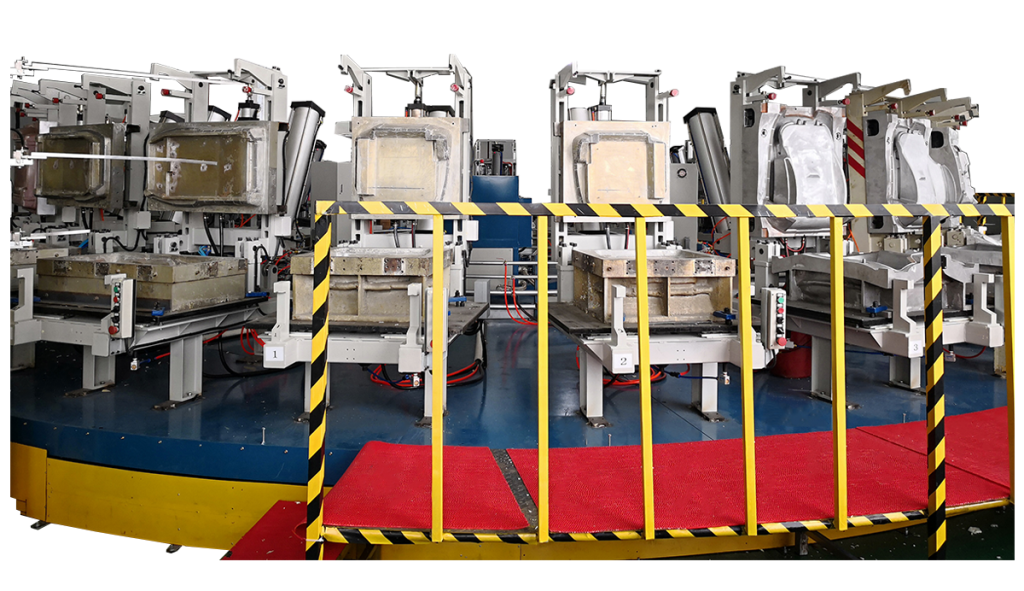
Yongjia car seat production line is designed to meet the diverse needs of automotive seating manufacturers. Using PU as the core material, it offers excellent comfort, durability, and formability—making it the preferred solution for modern car seats.
The line integrates multiple layout options such as rotary, carousel, and banana configurations, ensuring compatibility with various production volumes and factory sizes. With features like intelligent control systems, flexible mold adaptation, optional automation modules, and seamless connection to high or low pressure PU machines, our solution helps you achieve stable production, high efficiency, and consistent quality.
Whether for economy models or luxury seating systems, our PU car seat production line delivers the performance, flexibility, and ROI you need.
Different Type of Car Seat Production Line
Carousel Production Line
View DetailsThe Carousel Production Line adopts a circular or disc-shaped closed-loop layout, with workstations evenly distributed around the perimeter. A central drive mechanism rotates the entire carousel continuously, allowing products to pass through each station at a fixed rhythm. This compact layout is ideal for high-volume, standardized, and repetitive manufacturing—especially suited for mass production of a single seat model.
- Closed-loop layoutusing oval, rectangular, or other forms
- Driven by chains, rollers, or track systemsfor continuous component movement
- Supports parallel workstation configurationsfor simultaneous processing
- Compact footprint—maximizes space utilization
- High level of automation—requires minimal operator intervention
- Stable cycle time—consistent rhythm ensures controlled output and quality
- Best suited for high-volume production of a single model
Rotary Production Line
View DetailsThe Rotary Production Line utilizes a closed-loop conveyor system, often shaped in an oval or rectangular form. Components move continuously between stations using chains, rollers, or track systems. It supports parallel operations across multiple stations, making it ideal for medium to high-volume production environments with stable processes and takt time management requirements.
- Closed-loop layoutusing oval, rectangular, or other forms
- Driven by chains, rollers, or track systemsfor continuous component movement
- Supports parallel workstation configurationsfor simultaneous processing
- Handles medium to high-volume production efficiently
- Supports parallel processing, improving overall throughput
- Takt time controllable—production rhythm can be managed precisely
- More flexible than carousel lines, supporting multi-model production with proper design
How to Choose Right Production Line
| Project | Rotary Production Line | Carousel Production Line |
| Structural features | The molds circulate continuously on a circular track | The mold rotates on a circular platform |
| Occupancy area | Large, suitable for spacious sites | Compact footprint |
| Production adaptation | Medium to high production | High output |
| Automation degree | High, suitable for integrated spraying/demolding | Highly automated |
| Number of operators | 8-12 people (depending on the degree of automation) | 6-10 people |
| Applicable scenarios | Large seat factories | Customers with intensive orders and concentrated production lines |
| Investment cost | High | Medium and high |
- If you are looking for maximum production capacity and have enough plant space: choose the ring line, which is easy to integrate automatic spray demoulding, online weighing and other systems.
- If you have limited space but have high requirements for production capacity: choose the disc line, which has a compact structure and is suitable for automated continuous production.
Work Process of Car Seat Production Line
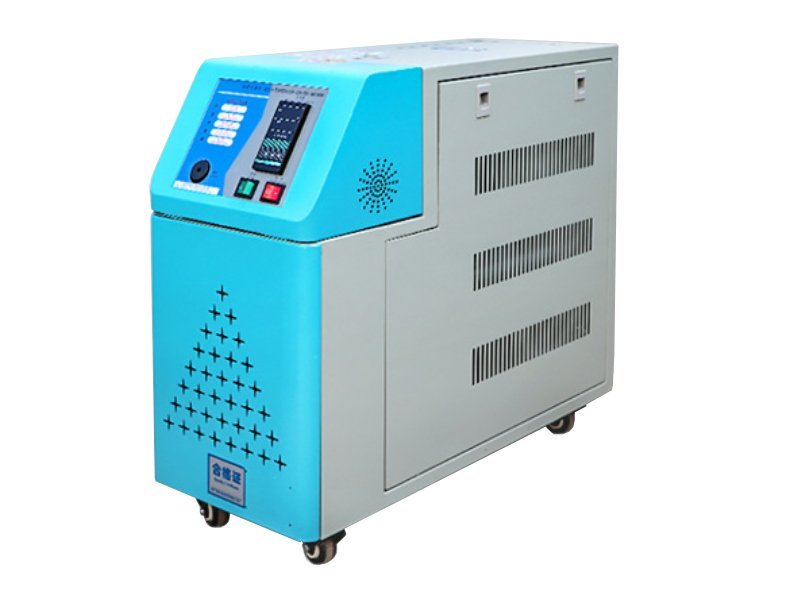
Step 1: Mold Preheating
The mold temperature controller is activated to bring the seat mold to the optimal operating temperature. Proper preheating ensures efficient material flow, consistent foam expansion, and enhanced product integrity.
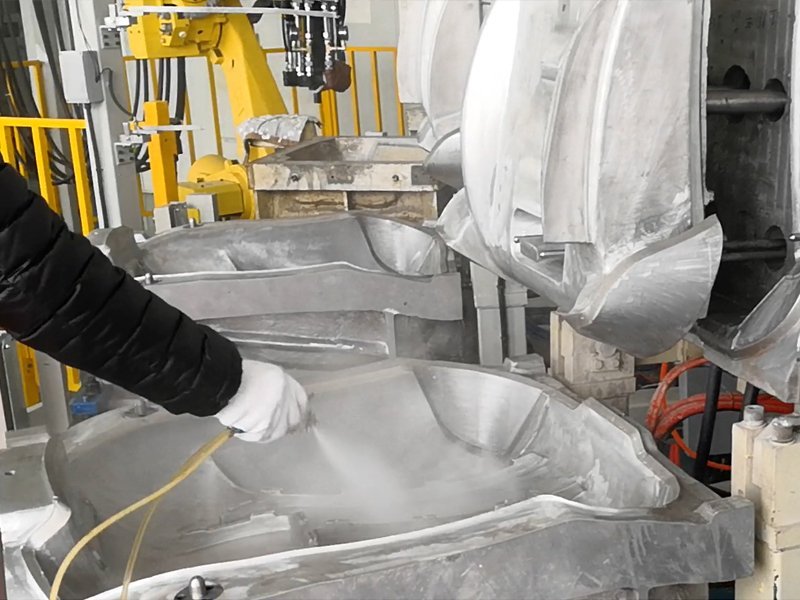
Step 2: Application Of Release Agent
A uniform coat of release agent is sprayed onto the preheated mold surface. This step prevents polyurethane from adhering to the mold, facilitating clean demolding and achieving a high-quality surface finish.
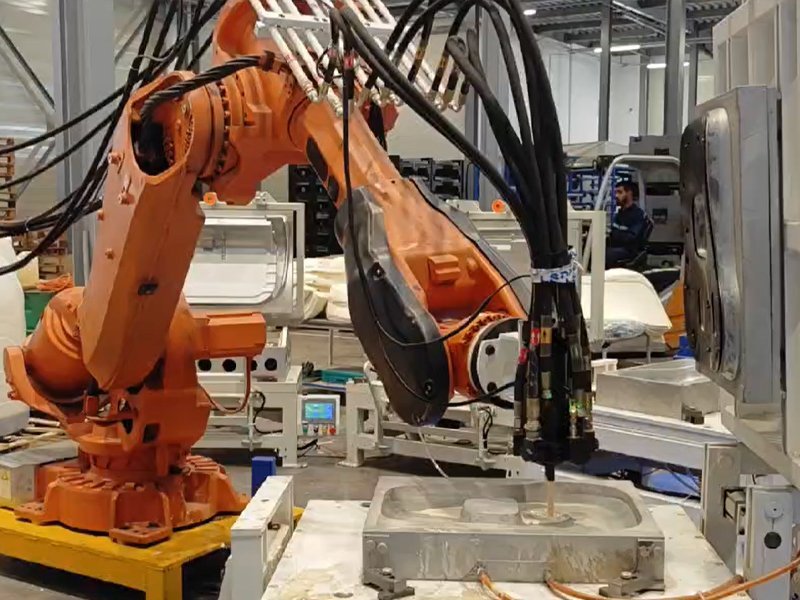
Step 3: Raw Material Injection
Using a high-pressure polyurethane foaming machine, polyether polyol (A-component) and isocyanate (B-component) are accurately metered, mixed, and injected into the mold cavity, ensuring precise chemical balance and even material distribution.
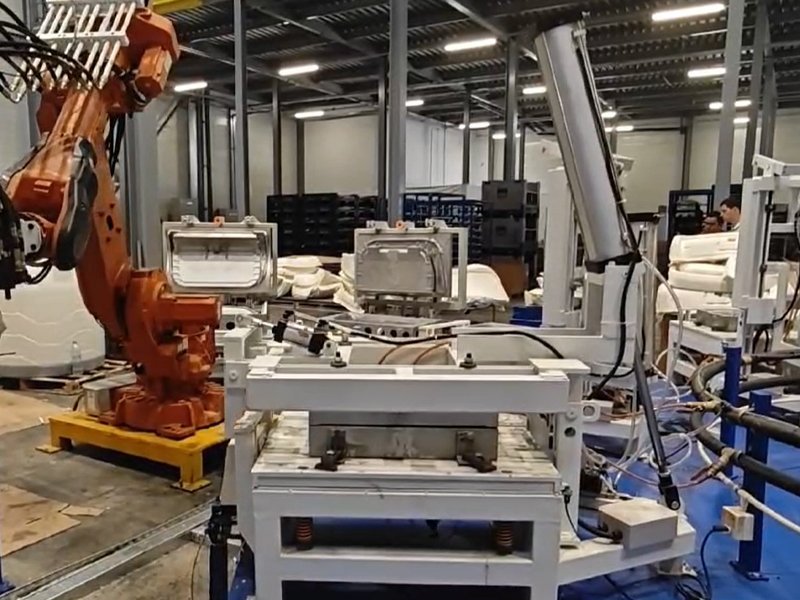
Step 4: Mold Closing And Foaming Reaction
The mold is securely closed, initiating the foaming and curing process. During this stage, the reactive mixture expands and solidifies, forming the core shape and structure of the seat cushion.
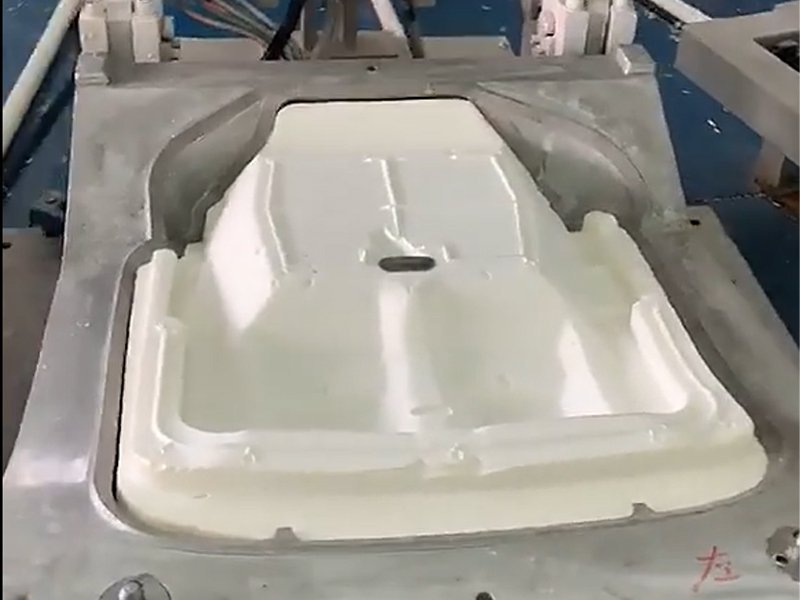
Step 5: Demolding And Initial Inspection
After the foaming process is complete and the material fully cured, the mold is opened and the molded seat is carefully extracted. The seat is now structurally complete and ready for subsequent stages such as trimming, surface finishing, and upholstery application.
FAQs of Car Seat Production Line
How do you ensure uniform foaming and seat quality?
Uniform foaming is achieved by precisely controlling the raw material mix ratios, injection pressure, and mold temperature. The mold temperature controller plays a key role in maintaining consistent heat distribution, ensuring that the foam expands evenly and cures uniformly.
What is the role of the mold temperature machine?
The mold temperature machine (or mold temperature controller) heats or cools the mold to maintain a constant temperature. This is critical for controlling the foaming reaction, ensuring proper material flow, and ultimately achieving a high-quality, consistent product.
How is equipment maintenance handled?
Regular maintenance is essential. It includes:Routine inspections and cleaning of molds, nozzles, and mixing heads.Calibration of dosing pumps and monitoring of injection pressure.Preventive maintenance schedules to reduce downtime and maintain optimal production efficiency.
What should be done if there are issues with uneven injection or bubble formation?
In case of issues, check the following:Raw Material Mix: Ensure the correct ratios of polyol and isocyanate.Injection Parameters: Verify that the injection pressure and speed are set correctly.Mold Temperature: Confirm that the mold is at the required temperature.Release Agent Application: Ensure even application to prevent sticking and surface defects.
How are safety and environmental standards maintained?
Safety and environmental compliance are ensured by:Adhering to strict operational protocols and safety guidelines.Using eco-friendly raw materials and release agents.Implementing proper ventilation and waste management systems to control emissions and protect workers.
What training and support are provided to operators?
Operators receive comprehensive training that includes:Detailed operation manuals and on-site training sessions.Remote technical support and troubleshooting assistance.Continuous updates on best practices to ensure efficient and safe production.