
In cabinet sealing applications, where precision and consistency are essential, the wrong equipment can quickly impact product quality and customer satisfaction.
Why Choosing the Right PU Dispensing System Matters
A PU dispensing system plays a direct role in forming uniform, reliable gaskets that protect products from dust, moisture, and environmental exposure.
If the system lacks precision or stability, it can result in uneven sealing, material waste, and frequent rework. These issues gradually increase operational costs and impact production efficiency.
Selecting the right system ensures consistent quality, streamlined operations, and long-term performance.
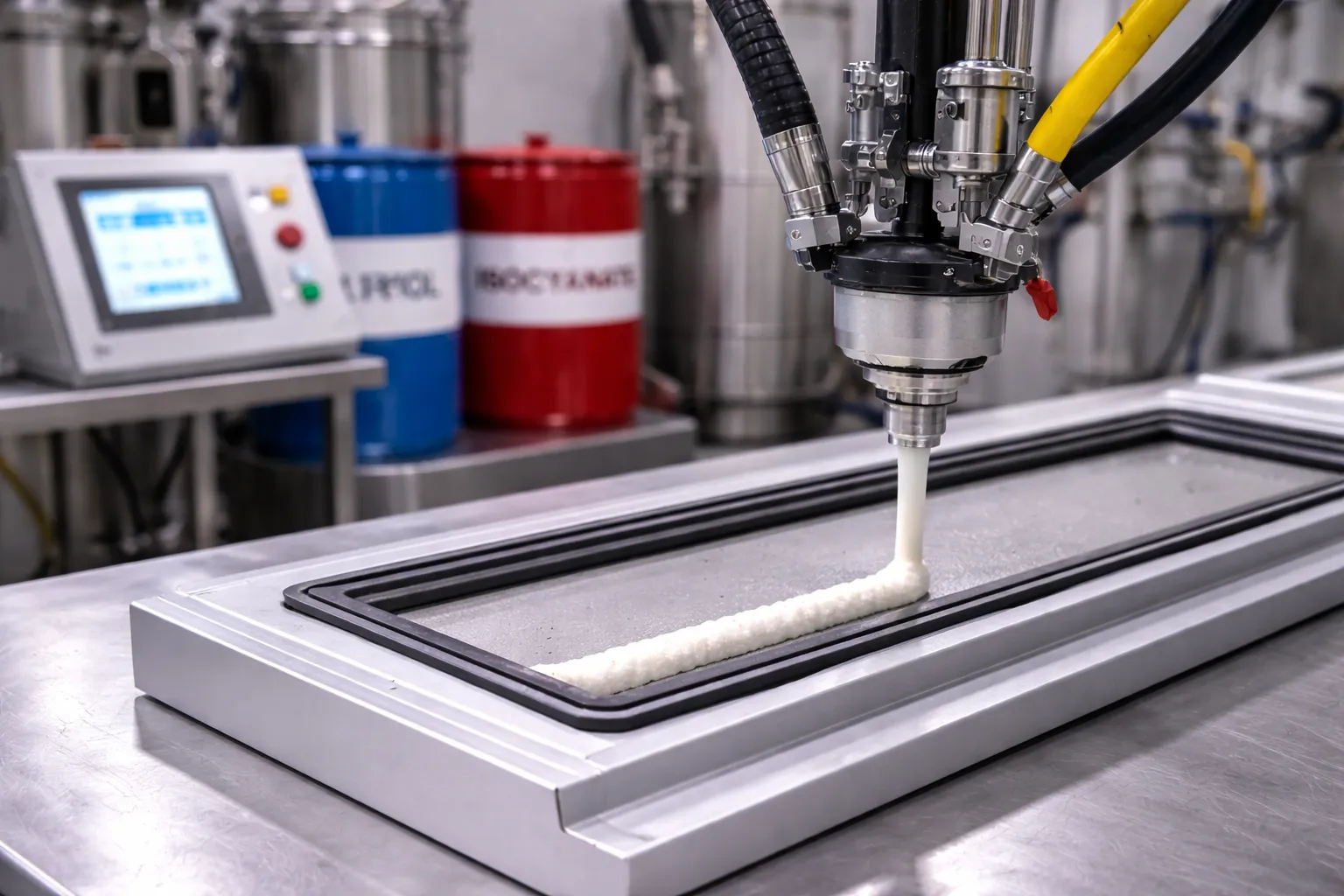
Common Mistakes When Selecting a PU Dispensing System
Many selection mistakes come from focusing on visible factors like price or basic specifications, while ignoring long-term performance and process stability.
In cabinet gasket sealing, small system limitations can quickly lead to large-scale quality issues.
Focusing Only on Price
Selecting equipment solely based on initial cost can lead to increased long-term expenses.Low-cost systems usually compromise on precision, stability, or component quality.
This leads to higher defect rates, increased maintenance, and greater material waste over time.
Better approach:
- Evaluate total cost of ownership (TCO)
- Consider long-term performance and reliability
Ignoring Application Requirements
Different cabinet designs require different dispensing paths, gasket widths, and sealing performance. A standard system may not meet these requirements.
This mismatch often leads to inconsistent sealing or rework during production.
Better approach:
- Define product specifications clearly
- Match system configuration to sealing requirements
Overlooking Dispensing Accuracy
Accuracy ensures reliable PU gasket sealing.Even small variations can result in gaps, overflow, or uneven sealing.
This directly affects waterproof and dustproof performance.
Better approach:
- Choose systems with high-precision metering and control
- Ensure repeatability across production cycles
Choosing the Wrong Level of Automation
Selecting either too simple or overly complex systems can reduce efficiency. Low automation increases labor dependency, while excessive automation raises unnecessary costs.
The wrong balance affects both productivity and return on investment.
Better approach:
- Match automation level to production scale
- Consider future expansion needs
Ignoring Temperature Control
Temperature directly affects material viscosity and flow behavior. Without stable temperature control, dispensing becomes inconsistent.
This can lead to unstable gasket formation and variation in curing performance.
Better approach:
- Use systems with integrated heating control
- Maintain stable material and ambient temperature
Neglecting Equipment Stability
System stability determines whether production can run continuously without variation. Unstable pressure or flow leads to inconsistent gasket dimensions.
Over time, this creates quality variation across batches.
Better approach:
- Choose machines with stable pumps and control systems
- Ensure consistent pressure and flow output
Ignoring Material Compatibility
Not all dispensing systems perform equally with different formulations. Viscosity, reactivity, and material behavior vary between systems.
Using incompatible equipment can lead to poor mixing and unstable results.
Better approach:
- Ensure system compatibility with your PU materials
- Test with actual production formulations
Lack of After-Sales Support
Even high-quality equipment requires support during installation, operation, and troubleshooting. Without support, downtime increases significantly.
This is especially critical for new production lines.
Better approach:
- Choose suppliers offering installation and training
- Ensure access to long-term technical support
Ignoring Maintenance and Ease of Operation
Complex systems without proper maintenance design can increase downtime and operator errors.
If daily operation is difficult, production efficiency will suffer.
Better approach:
- Select user-friendly systems
- Ensure easy maintenance and access to components
Most selection mistakes come from focusing on short-term decisions rather than long-term performance. A well-matched system should balance accuracy, stability, and efficiency.
Choosing the right system is not about buying the most advanced machine, but about selecting the one that fits your production needs.
Mistakes vs Correct Approach
| Mistake | Result | Recommended Approach |
| Focus only on price | High long-term cost | Evaluate total cost |
| Ignore application | Poor sealing performance | Match system to application |
| Low accuracy | Defects and leakage | Use precision systems |
| Wrong automation level | Inefficiency | Choose based on production needs |
| Poor temperature control | Instability | Ensure proper heating |
| Weak support | Downtime | Choose reliable supplier |
What You Should Focus on Instead
Instead of focusing on short-term cost or limited parameters, manufacturers should evaluate the overall performance and suitability of the system.
Key factors include:
- Production volume and cycle time
- Product design and sealing requirements
- Required dispensing accuracy
- Equipment reliability and durability
- Availability of technical support
A balanced evaluation leads to better decision-making and long-term efficiency.
How the Right PU Dispensing System Improves Production
A well-matched PU dispensing system delivers stable and repeatable performance. It ensures uniform gasket formation and reduces variability across production batches.
Improved consistency leads to fewer defects, less material waste, and smoother operations.
Key benefits include:
- Consistent sealing quality
- Reduced defect rates
- Improved production efficiency
- Lower maintenance and downtime
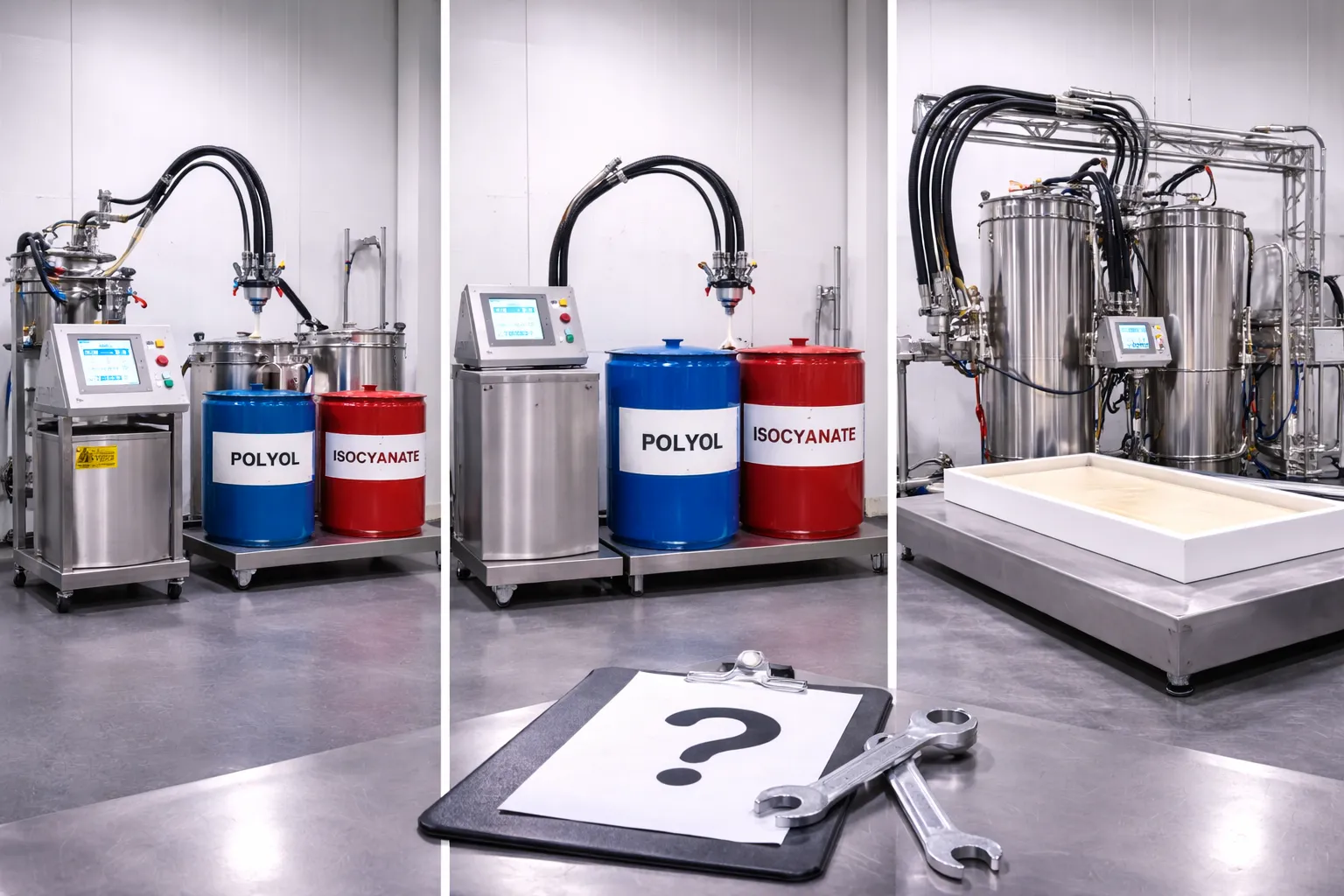
Configuration Comparison: How to Choose the Right Setup
Selecting the right PU dispensing system configuration depends on production volume, product complexity, and accuracy requirements.Different system configurations deliver varying performance levels and investment requirements.
| Configuration Type | Suitable Production Scale | Accuracy Level | Automation Level | Key Advantages | Recommended Use |
| Basic System | Small batch production | Standard | Semi-automatic | Lower cost, easy operation | Small factories, simple cabinet sealing |
| Standard System | Medium production | High | Semi to automatic | Stable performance, good balance | Electrical cabinets, enclosure sealing |
| High-Precision System | High-volume production | Very high | Fully automatic | Excellent consistency, minimal defects | High-end sealing, export products |
| Custom Integrated System | Large-scale production | Very high | Fully automated line | Full automation, maximum efficiency | Industrial production lines |
How to Choose Based on Your Needs
Instead of choosing the most expensive system, focus on matching the configuration to your actual production requirements.
- Low volume + simple products → Basic or standard system
- Medium volume + consistent quality → Standard system
- High volume + strict quality control → High-precision system
- Mass production + automation → Custom integrated system
Over-specifying increases cost without improving efficiency, while under-specifying leads to instability and defects. The right system should match your production scale and quality needs.
Selecting a PU dispensing system is not just a purchase—it is a long-term investment in production stability and product quality.
Avoiding common mistakes helps manufacturers reduce risk and improve operational performance.
By focusing on the right factors and choosing a reliable system, consistent and efficient gasket sealing can be achieved.
Related guide: How to Choose a Car Seat Foam Production Line — machine class, mold count, output planning and the density, ILD and ISO 3795 quality checks.
See also: Polyurethane Foam Machines: The Complete Guide — all machine types, components, selection and applications in one place.