
Yongjia · Polyurethane Equipment

Automotive Seat PU Foam Production Line

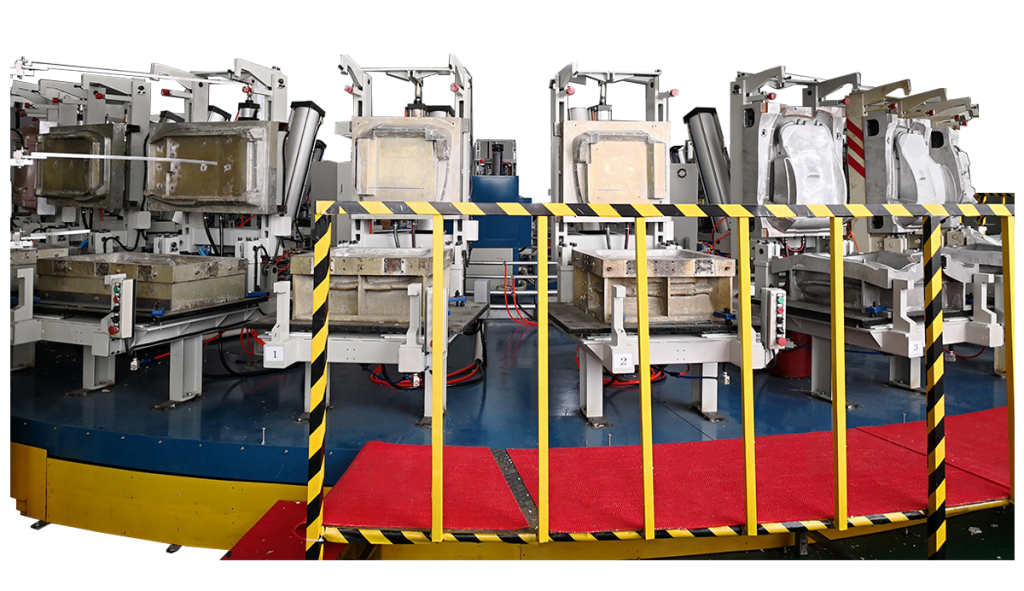
An automotive seat line is a coordinated molding system—not just a foaming machine. The layout, mold circulation, material configuration and operator stations must support the seat-model mix and takt.

  • Seat cushions and backrests
  • Headrests and armrests
  • Single-density molded seat foam
  • Dual-hardness or multi-component projects after process review
Get a Quote

Line planning guide

Start With Seat Mix, Mold Cycle and Required Takt

The dosing machine alone does not determine line output. Mold count, demold time, release-agent and insert operations, model changeovers and automation level must be planned as one production system.

Seat and foam specification

Cushion, backrest and headrest mix; part weight; target density and hardness; inserts; and quality requirements.

Mold and cycle plan

Available molds, heating method, pour and curing time, demolding steps and changeover frequency.

Layout and automation

Rotary or carousel arrangement, operator stations, robot interfaces, available floor space and future capacity expansion.

Information needed to size the system

  • Part drawings, weights and foam specifications
  • Target parts per shift and model mix
  • Mold quantity, cycle time and heating method
  • Factory layout, labor plan and desired automation

What the first engineering reply should cover

  • Initial line-layout recommendation
  • Mold-count and takt assumptions
  • Suggested dosing-machine class
  • List of utilities and interfaces to confirm

Project qualification

Send the application, target output and factory conditions. The form keeps this page as the source so the request reaches sales with its equipment context.

Request a Configuration Review

A formal quotation follows after the technical scope is confirmed.

Where This Equipment or Process Fits

The final configuration is matched to the finished product, material system and production target. The application list below is a routing guide, not a claim that one standard configuration covers every process.

  • Seat cushions and backrests
  • Headrests and armrests
  • Single-density molded seat foam
  • Dual-hardness or multi-component projects after process review

Production Process

  1. Prepare and release the mold.
  2. Meter, mix and pour the validated formulation.
  3. Close, cure and circulate the mold through the selected layout.
  4. Demold, trim, inspect and return the mold to production.

Technical Information to Confirm

ItemWhat must be confirmed
LayoutCompare rotary carousel, floor rail and curved arrangements.
MoldsCount, dimensions, heating and model-change plan.
CyclePour, cure, demold and handling time.
CapacityOutput per shift with working hours and changeover assumptions.
Multi-hardnessDefine component streams, mixing heads and pouring sequence.
AutomationRobot, conveyor, traceability and safety interfaces.

Scope, Evidence and Acceptance

One or two mixing heads and two-, three- or additional-component systems are quoted only after the seat process and formulation are confirmed.

Before order, the proposal should identify the selected model or system, included and excluded equipment, utilities, buyer responsibilities, test material, acceptance criteria, documentation and service scope. Values without a model, unit or condition are not used as purchasing guarantees.

Send the product drawing, material data and target output for an engineering configuration review.

Request Configuration

Related Equipment and Next Steps

Interested in this equipment?

Get specifications, pricing and lead time from Yongjia's engineers.

Request a Quote