
Polyurethane spray foam has become one of the most widely used materials in modern insulation and waterproofing projects. Its strong adhesion, seamless coverage, and excellent thermal insulation performance make it suitable for roofs, walls, cold storage buildings, and industrial structures.
However, spray foam performance depends heavily on proper application methods. Surface preparation, environmental conditions, spraying parameters, and equipment selection all directly affect foam quality, adhesion strength, and long-term durability.
What Is PU Spray Foam?
PU spray foam is produced by mixing polyol and isocyanate through high pressure spraying equipment. After mixing, the material rapidly expands and cures to form insulation and waterproofing layers.
The foam creates a continuous protective surface without joints or gaps. This helps reduce heat transfer, air leakage, and water penetration in buildings and industrial facilities.
Spray polyurethane foam is widely used because it combines insulation, waterproofing, and structural reinforcement in a single material system.
Open-Cell and Closed-Cell Spray Foam
Open-cell spray foam has a softer structure and lower density. It provides good sound absorption and air sealing performance, making it suitable for interior wall insulation and residential applications.
Closed-cell spray foam has a denser structure and higher compressive strength. It offers better thermal insulation and moisture resistance, making it more suitable for roofing, refrigeration, and waterproofing applications.
Closed-cell foam also improves structural rigidity and provides stronger adhesion on metal, concrete, and industrial surfaces.
Main Applications of PU Spraying
Polyurethane spraying technology is widely used across construction, refrigeration, waterproofing, and industrial insulation industries.
The seamless spraying process allows foam to cover irregular surfaces and complex structures more effectively than traditional insulation materials.
Different projects require different foam densities, spraying thicknesses, and equipment configurations.
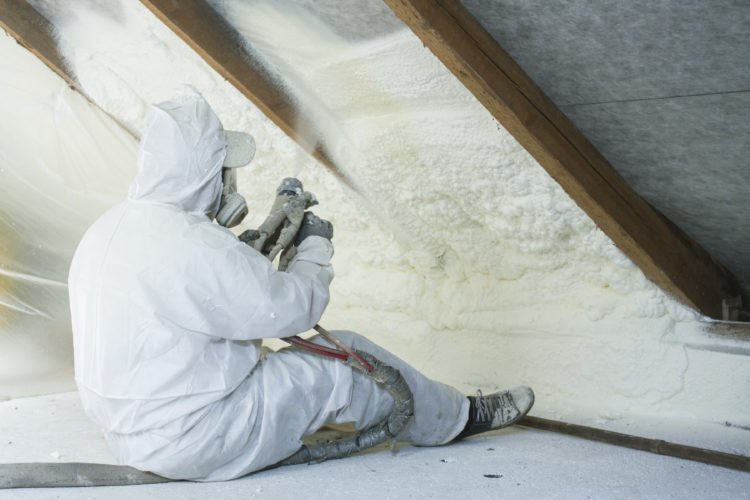
Roof Insulation Applications
PU spray foam is commonly used for metal roofs, concrete roofs, warehouses, and industrial buildings. The foam layer reduces heat transfer and improves indoor temperature stability.
Closed-cell spray foam is especially popular in roofing because it combines insulation and waterproofing functions within a single coating system.
Many industrial buildings use polyurethane spraying to reduce HVAC energy consumption and improve long-term weather resistance.
Wall Insulation Applications
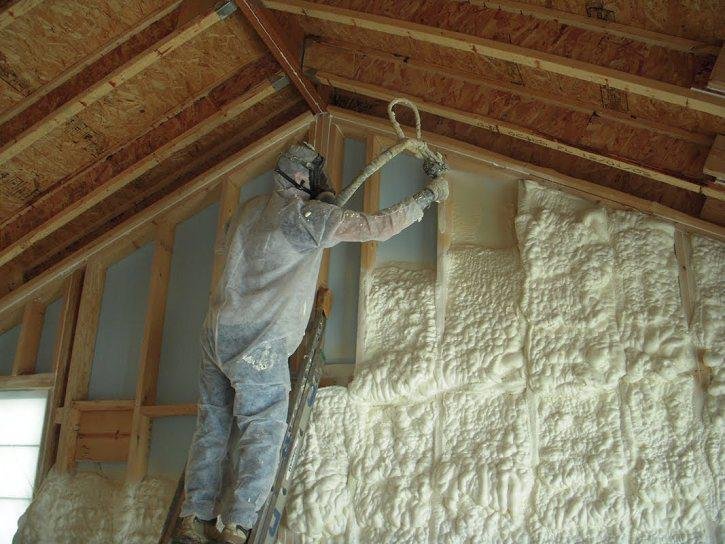
PU spraying is widely used for exterior walls, interior walls, and cavity wall insulation systems. Spray foam fills gaps and reduces air leakage more effectively than many traditional insulation materials.
Because spray foam expands directly on the substrate surface, it adapts well to irregular structures and hard-to-reach installation areas.
Cold storage buildings and refrigerated warehouses often use thicker closed-cell spray foam systems for higher insulation performance.
Waterproofing Applications
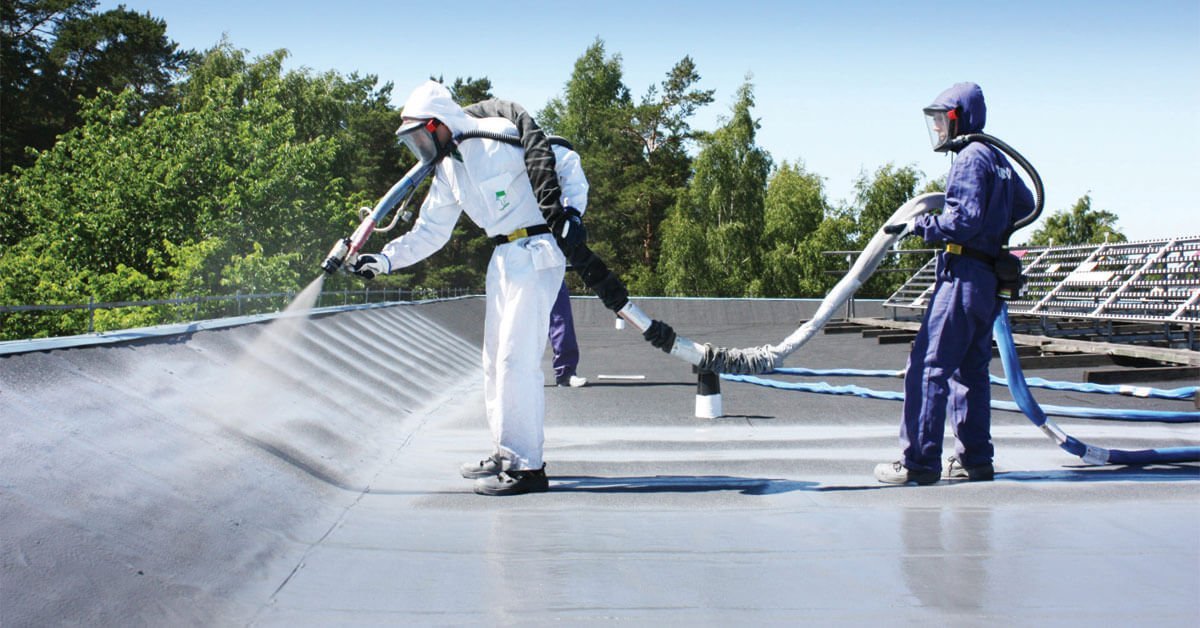
Polyurethane spraying is also widely used in waterproofing systems for roofs, foundations, pipelines, and industrial tanks.
The seamless foam layer helps eliminate water penetration paths that commonly appear in traditional sheet-based waterproofing systems.
Closed-cell polyurethane foam provides low water absorption and excellent resistance to moisture penetration.
Equipment Required for PU Spraying
Professional PU spraying requires stable and properly configured equipment systems. Machine performance directly affects foam quality, spraying stability, and production efficiency.
A complete spraying system usually includes a spray foam machine, heated hose, spray gun, air compressor, and material transfer systems.
Equipment selection should match project size, material viscosity, and continuous operation requirements.
PU Spray Foam Machines
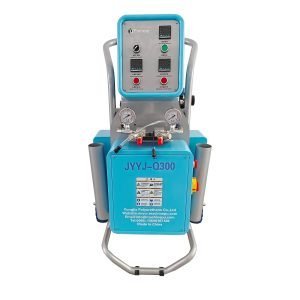
High pressure spray foam machines are the most common systems used in insulation and waterproofing projects. These machines use high pressure impingement mixing technology to achieve stable material mixing.
Hydraulic spray foam machines provide stable output pressure and support long continuous spraying operations. Pneumatic systems are usually smaller and suitable for medium or small projects.
Stable temperature and pressure control are critical for maintaining consistent foam expansion and adhesion performance.
Heated Hose Systems
The heated hose maintains stable material temperature during transfer from the machine to the spray gun. Temperature fluctuation inside the hose can affect foam density and reaction speed.
Longer hose systems are often required for large construction sites and industrial projects. Proper hose insulation improves spraying consistency during continuous operation.
Most industrial spray systems use independent temperature controls for ISO, polyol, and hose heating zones.
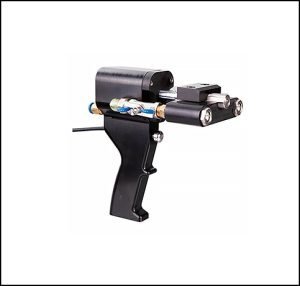
Spray Gun and Nozzle Selection
The spray gun is responsible for mixing and atomizing polyurethane materials during application. Different mixing chambers and nozzle sizes affect spray pattern and foam distribution.
Proper nozzle selection improves coverage uniformity and reduces overspray waste. Operators should select spray patterns according to project type and spraying thickness requirements.
Regular cleaning and maintenance of the spray gun are essential for stable spraying performance.
Surface Preparation Guidelines
Surface preparation is one of the most important factors affecting spray foam adhesion and long-term durability.
Dirty, wet, or contaminated surfaces can cause poor bonding, foam separation, and premature coating failure.
Operators should inspect all surfaces carefully before spraying begins.
Cleaning Requirements
Dust, oil, rust, moisture, and loose particles must be removed before foam application. Surface contamination reduces adhesion strength and creates defects inside the foam structure.
Metal roofs may require rust removal and degreasing treatment before spraying. Concrete surfaces should remain dry and structurally stable.
Proper cleaning significantly improves foam bonding performance and long-term reliability.
Surface Temperature Requirements
Substrate temperature strongly affects foam expansion and adhesion. Cold surfaces may slow the chemical reaction and reduce foam bonding strength.
Most spray foam systems perform best when substrate temperatures remain above 15°C. Extremely hot surfaces may also create unstable curing conditions.
Operators should monitor both ambient temperature and substrate temperature during spraying operations.
Environmental Conditions for PU Spraying
Environmental conditions directly influence foam reaction speed, curing quality, and spraying stability.
Temperature, humidity, ventilation, and wind conditions must remain within recommended ranges to achieve stable application performance.
Ignoring environmental conditions often leads to foam defects and reduced insulation performance.
Temperature Control
Most PU spray foam materials perform best within ambient temperatures between 15–35°C.
Low temperatures may reduce foam expansion and create poor adhesion, while excessive heat can accelerate reactions too quickly and create surface cracking.
Material temperature should also remain stable during spraying to maintain proper viscosity and mixing quality.
Humidity Control
Excessive humidity introduces unwanted moisture into the chemical reaction process. Water reacts with isocyanate and may create unstable foam structures or excessive gas generation.
High humidity conditions can cause shrinkage, voids, blistering, or reduced adhesion performance.
Indoor projects often require ventilation and humidity management systems to maintain stable spraying conditions.
Ventilation Requirements
Proper ventilation protects workers from chemical exposure while supporting stable curing conditions.
Indoor spraying projects should use mechanical ventilation systems to maintain continuous airflow during and after spraying operations.
Good airflow also helps remove overspray particles and reduce vapor concentration in enclosed spaces.
Key Spraying Parameters
Stable spraying parameters are essential for achieving uniform foam density and consistent insulation performance.
Operators must carefully control mixing ratio, spraying pressure, material temperature, and spray thickness throughout the project.
Small parameter changes can significantly affect final foam quality.
Mixing Ratio Control
Correct polyol and isocyanate ratios are critical for stable foam reactions. Off-ratio spraying often creates brittle foam, shrinkage, poor curing, or surface defects.
Modern spray foam machines use proportioning systems to maintain stable material ratios during operation.
Regular calibration helps reduce ratio-related defects and material waste.
Spray Pressure
High pressure spraying systems usually operate between 8–14 MPa depending on material type and hose length.
Stable pressure improves mixing quality and spray atomization. Pressure fluctuation may create uneven foam density and unstable spraying patterns.
Hydraulic spray machines generally provide better pressure stability during continuous operation.
Spray Thickness Per Pass
Excessive spraying thickness generates high internal heat during foam expansion and curing.
Most closed-cell spray foam systems recommend applying multiple thinner layers instead of one excessively thick pass.
Layer-by-layer spraying improves curing stability and reduces the risk of shrinkage or cracking.
Proper Spraying Techniques
Spraying technique strongly affects foam appearance, thickness uniformity, and insulation performance.
Operators should maintain stable spray gun movement, consistent spraying distance, and proper overlap between passes.
Experienced operators can significantly improve foam consistency and reduce material waste.
Spray Gun Distance and Angle
Most spray applications maintain a spray distance between 40–80 cm depending on nozzle type and spray pattern.
The spray gun should remain perpendicular to the surface whenever possible to maintain uniform coverage.
Irregular spraying angles may create uneven thickness and unstable foam structures.
Layer-by-Layer Spraying
Large insulation projects often require multiple foam layers to achieve target thickness.
Operators should allow sufficient curing time between passes to avoid overheating and foam deformation.
Controlled multi-layer spraying improves dimensional stability and long-term insulation performance.
Common PU Spraying Problems
Several common defects may appear during polyurethane spraying if parameters or environmental conditions are unstable.
Early identification of these problems helps reduce material waste and improve project quality.
Most defects result from multiple interacting factors rather than a single issue.
Poor Adhesion Problems
Poor adhesion usually occurs because of moisture contamination, dust, oil residue, or incorrect substrate temperature.
Surface preparation and environmental control are essential for preventing foam separation and peeling.
Operators should always inspect test areas before full-scale spraying begins.
Foam Shrinkage Problems
Shrinkage commonly results from excessive foam thickness, incorrect mixing ratios, or unstable curing conditions.
Applying thinner layers and maintaining stable material temperatures helps reduce shrinkage risks.
Proper equipment calibration also improves foam dimensional stability.
Uneven Foam Density
Pressure instability, incorrect temperature settings, or material imbalance may create uneven foam density.
Regular equipment maintenance and stable process control are critical for maintaining consistent foam structures.
Continuous monitoring improves long-term spraying performance.
Safety Guidelines for PU Spraying
Polyurethane spraying involves chemical materials and high pressure equipment, making safety management extremely important.
Proper personal protective equipment and ventilation systems help reduce operator exposure risks.
Safety procedures should remain a core part of every spraying project.
Recommended PPE Equipment
Essential Protective Equipment
- Full-face respirator
- Chemical protective suit
- Nitrile gloves
- Protective goggles
- Safety boots
Workers should also receive proper safety training before operating spray foam systems.
Fire and Explosion Safety
Some polyurethane materials and blowing agents may present flammability risks during spraying and storage.
Proper grounding, ventilation, and explosion-proof systems help reduce fire hazards in industrial projects.
Storage areas should remain dry, ventilated, and protected from ignition sources.
Different projects require different spraying capacities and machine configurations.
Portable systems are suitable for smaller insulation projects, while hydraulic high pressure systems are better for large industrial applications.
Stable output, heating capability, and pressure performance are key factors in machine selection.
| Machine Model | Output Range | Heating Power | Max Pressure | Application |
| JYYJ-3D | 2–8 kg/min | 7.5 kW | 22 MPa | Small insulation projects |
| JYYJ-H600 | 3–10 kg/min | 18 kW | 24 MPa | Roofing and waterproofing |
| JYYJ-H-V6T | 2–12 kg/min | 22.5 kW | 36 MPa | Large industrial spraying |
Future Trends in PU Spraying Technology
Modern polyurethane spraying systems continue moving toward smarter and more energy-efficient production technologies.
PLC control systems, intelligent temperature management, and automated spraying robots are becoming increasingly common in large industrial projects.
Low-emission spray materials and energy-saving heating systems will also play larger roles in future construction applications.
Proper PU spraying techniques are essential for achieving stable insulation and waterproofing performance. Surface preparation, environmental control, spraying parameters, and equipment selection all directly influence foam quality and durability.
High-quality spray foam systems can significantly improve building energy efficiency, moisture resistance, and long-term structural protection. As construction standards continue evolving, professional polyurethane spraying technology will remain an important solution for modern insulation and waterproofing applications.